

Article Plan: Inches to Millimeters Conversion Chart PDF
This article details creating and utilizing a PDF conversion chart for inches to millimeters. It covers conversion factors, formulas, detailed charts for small numbers, and practical applications across various industries.
The inch and millimeter represent fundamental units of length, deeply ingrained in distinct measurement systems. The inch, a cornerstone of the imperial and US customary systems, boasts a historical lineage tracing back to ancient Roman measurements. It’s commonly used in the United States for everyday applications like body height, furniture dimensions, and screen sizes.
Conversely, the millimeter (mm) resides within the metric system, the globally dominant standard for scientific and technical purposes. Defined as one-thousandth of a meter, the millimeter offers precision and ease of scaling, making it ideal for engineering, manufacturing, and detailed design work. Its prevalence extends across Europe, Asia, and most of the world.
Understanding both systems is crucial, particularly when dealing with international collaborations or components sourced from diverse regions. The need for conversion arises frequently, as specifications often intermingle imperial and metric units. A clear grasp of these units, and the conversion process, is essential for accurate project execution and avoiding costly errors. This article will focus on bridging the gap between these two systems with a practical PDF conversion chart.
Why Convert Inches to Millimeters?
The necessity for converting inches to millimeters stems from a world increasingly reliant on global collaboration and standardized measurements. While the inch remains prevalent in the United States, the vast majority of the world operates using the metric system, with the millimeter as a key unit of length.
This disparity creates practical challenges in fields like manufacturing, engineering, and international trade. Components designed in inches often require millimeter equivalents for production in metric-based facilities. Similarly, designs originating in millimeters must be translated to inches for US-based manufacturers or consumers.
Accurate conversion prevents costly errors, ensures compatibility, and streamlines communication. Misinterpreting dimensions can lead to ill-fitting parts, assembly issues, and project delays. Furthermore, many digital design tools and CAD software primarily utilize metric units, necessitating conversions for imperial-based designs. A readily available conversion chart, especially in PDF format for easy access and printing, becomes an invaluable tool for professionals and hobbyists alike, facilitating seamless integration between these measurement systems.
The Conversion Factor: 25.4 mm per Inch
The cornerstone of any inch-to-millimeter conversion is the fundamental conversion factor: 1 inch equals precisely 25.4 millimeters. This value isn’t arbitrary; it’s a defined relationship established internationally to bridge the gap between the imperial and metric systems.
Understanding this factor is crucial because all conversions, whether simple or complex, are derived from it. It’s the multiplier used when transforming inch measurements into their millimeter equivalents. For instance, a length of 2 inches would be calculated as 2 * 25.4 = 50.8 millimeters.

The precision of 25.4 is vital, particularly in engineering and manufacturing where even minute discrepancies can compromise functionality. Utilizing rounded values can introduce unacceptable errors. Therefore, maintaining the full decimal precision of the conversion factor is paramount. A well-designed PDF conversion chart will prominently display this factor for quick reference, reinforcing its importance and minimizing the risk of calculation mistakes. This single number unlocks accurate conversions across a wide range of applications.

Understanding the Conversion Formula
The conversion from inches to millimeters is achieved through a straightforward multiplication formula: Millimeters (mm) = Inches (in) * 25.4. This formula embodies the core relationship between the two units, where the inch value is simply scaled by the conversion factor of 25.4.
While seemingly simple, grasping the formula’s application is key to accurate conversions. It applies universally, regardless of whether you’re dealing with whole numbers, fractions, or decimal values. For example, converting 3.5 inches requires multiplying 3.5 by 25.4, resulting in 88.9 millimeters.
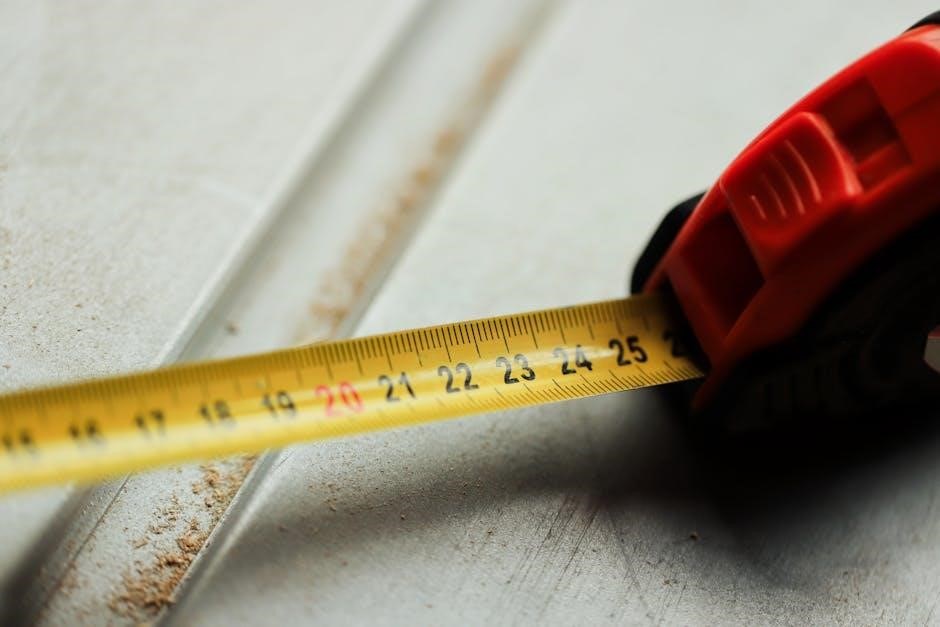
A comprehensive PDF conversion chart often presents this formula alongside the charts themselves, serving as a constant reminder and a tool for independent calculations. Understanding why the formula works – that 25.4 represents the number of millimeters in a single inch – reinforces comprehension. Furthermore, recognizing this formula allows for reverse conversions, from millimeters back to inches, by dividing by 25.4. Mastery of this formula empowers users to confidently navigate between these measurement systems.

Simple Conversions: Whole Numbers
Converting whole numbers of inches to millimeters is the most straightforward application of the conversion formula (mm = inches * 25.4). A PDF conversion chart dedicated to this simplifies the process, offering quick look-up values for common inch measurements.
For instance, 1 inch directly translates to 25.4 millimeters. Similarly, 2 inches become 50.8 mm, 3 inches equal 76.2 mm, and so on. These basic conversions form the foundation for understanding more complex calculations involving fractions or decimals.
A well-designed PDF chart will typically list these whole number conversions in a clear, tabular format, facilitating rapid identification of equivalent values. This is particularly useful in scenarios where frequent, simple conversions are required, such as basic woodworking or DIY projects. The ease of referencing these pre-calculated values minimizes the risk of calculation errors; Utilizing a PDF chart for whole number conversions builds confidence and efficiency, preparing users for tackling more intricate measurements.

Converting Fractional Inches to Millimeters
Converting fractional inches to millimeters requires an extra step: transforming the fraction into a decimal before applying the 25.4 mm per inch conversion factor. A comprehensive PDF conversion chart often includes a section dedicated to common fractional equivalents, streamlining this process.
For example, 1/2 inch equals 0.5 inches, which then converts to 12.7 mm (0.5 * 25.4). Similarly, 1/4 inch is 0.25 inches, resulting in 6.35 mm. Charts frequently display fractions like 1/8, 1/16, and 1/32 alongside their decimal and millimeter counterparts.
A well-structured PDF chart will present these conversions in an organized manner, potentially using a table format for easy comparison. When a specific fraction isn’t listed, users can divide the numerator by the denominator to obtain the decimal equivalent. Accuracy is crucial; therefore, relying on a verified PDF chart minimizes calculation errors. Mastering fractional conversions is essential for precision in fields like machining and detailed design work, where accuracy is paramount.
Converting Decimal Inches to Millimeters
Converting decimal inches to millimeters is the most straightforward method, relying on a simple multiplication. The core principle is multiplying the decimal inch value by the conversion factor of 25.4 mm per inch. A readily available PDF conversion chart will often feature a dedicated section for quick decimal-to-millimeter lookups.
For instance, 1.5 inches converts to 38.1 mm (1.5 * 25.4). Similarly, 0.75 inches equals 19.05 mm. These calculations are easily performed with a calculator, but a PDF chart provides a convenient reference, especially during projects requiring frequent conversions.
High-quality PDF charts often include a range of decimal values, allowing users to quickly find the corresponding millimeter measurement. This is particularly useful in engineering and design, where precise measurements are critical. Utilizing a pre-calculated chart minimizes the risk of arithmetic errors. The clarity and organization of a well-designed PDF chart significantly enhance efficiency and accuracy in various applications, ensuring consistent and reliable results.
Inches to Millimeters Conversion Chart (Small Numbers ⏤ Detailed)
A detailed inches to millimeters conversion chart focusing on small numbers is invaluable for precision work. These charts typically list inch values from 0.0127 (1/80 inch) upwards, providing corresponding millimeter equivalents with high accuracy. A quality PDF chart will present this data in a clear, tabular format for easy reference.
For example, a chart might show: 0.01 inch = 0.254 mm, 0.02 inch = 0.508 mm, 0.03 inch = 0.762 mm, and so on. This level of granularity is crucial in machining, woodworking, and other fields where fractional or decimal inch measurements are common.
PDF charts designed for small number conversions often include multiple columns, displaying both inch and millimeter values side-by-side. This facilitates quick lookups and reduces the potential for errors. The inclusion of common fractional equivalents (e.g., 1/64, 1/32, 1/16) further enhances usability. A well-structured chart is a practical tool for anyone needing frequent, precise conversions between these units, streamlining workflows and improving project outcomes.
Millimeters to Inches Conversion Chart (Small Numbers — Detailed)
A detailed millimeters to inches conversion chart, specifically for small numbers, is essential for projects requiring reverse conversions. These charts typically begin with values like 0.1 mm and increment upwards, providing corresponding inch equivalents with precision. A well-designed PDF chart will present this data in an easily readable table format;

For instance, a chart might display: 0.1 mm = 0.003937 inches, 0.2 mm = 0.007874 inches, 0.5 mm = 0.019685 inches, and so forth. This granularity is particularly useful when working with metric designs or components that need to interface with imperial systems.
PDF charts focused on small number conversions often feature columns displaying both millimeter and inch values, enabling rapid lookups and minimizing errors. Including common metric increments (e.g., 0.5 mm, 1 mm, 2.5 mm) enhances practicality. A clearly organized chart serves as a valuable resource for anyone frequently converting between these units, improving efficiency and accuracy in various applications, from engineering to crafting.

Printable PDF Conversion Charts: Benefits
Printable PDF conversion charts offer numerous advantages over relying solely on online tools or memorizing the conversion factor (25.4 mm per inch). A key benefit is accessibility – a printed chart is available anytime, anywhere, regardless of internet connectivity or device availability. This is crucial in workshops, construction sites, or remote locations.
PDF charts provide a quick reference, eliminating the need to repeatedly perform calculations or search online. They are particularly useful for frequent conversions during projects. Furthermore, a PDF format ensures consistent formatting across different devices and printers, maintaining readability and accuracy.
Printable charts also minimize the risk of data entry errors associated with manual calculations. They are ideal for teams, ensuring everyone uses the same conversion standards. A well-designed PDF chart can include both inches-to-millimeters and millimeters-to-inches conversions, offering comprehensive utility. Ultimately, these charts streamline workflows and enhance precision in any application requiring unit conversions.
Where to Find Reliable PDF Conversion Charts
Locating trustworthy PDF conversion charts is essential for accurate results. Several reputable sources offer downloadable charts, ensuring reliability and precision. MISUMI USA provides a convenient online calculator and likely offers downloadable resources. Many engineering and manufacturing websites host free, printable charts designed for professional use.
Online search engines (Google, Bing) are a good starting point, but carefully evaluate the source. Look for charts from established organizations or educational institutions. Technical drawing and drafting resource websites often include conversion tables as part of their broader offerings. Be wary of charts from unknown or unverified sources.
Bearing manufacturers frequently provide imperial-to-metric conversion charts, including inches to millimeters, in PDF format. Additionally, measurement tool suppliers may offer downloadable charts as a value-added service. Always double-check the chart’s accuracy against known conversions before relying on it for critical applications. Prioritize charts that clearly state their source and revision date.

Using Conversion Charts for Engineering & Design
In engineering and design, precise conversions are paramount. Inches to millimeters conversion charts serve as vital tools for professionals working with both imperial and metric systems. These charts facilitate accurate scaling, dimensioning, and manufacturing processes, minimizing errors and ensuring compatibility between designs and physical components.
Designers utilize these charts during the initial concept phase, translating client specifications or existing imperial drawings into metric units for modeling and analysis. Engineers rely on them for material selection, specifying fastener sizes, and verifying tolerances. Machining and manufacturing processes demand precise conversions to ensure parts fit together correctly.
PDF charts offer a readily accessible reference during shop floor operations, allowing technicians to quickly verify dimensions and avoid costly mistakes. They are particularly useful when collaborating with international teams or suppliers who primarily use metric measurements. Maintaining a readily available, accurate conversion chart streamlines workflows and enhances overall project efficiency, reducing the risk of miscommunication and rework.
Common Applications Requiring Conversion
The need for inches to millimeters conversion arises frequently across diverse fields. Woodworking often involves using imperial lumber dimensions while metric fasteners are employed. Machining routinely demands switching between systems for tooling, workpiece measurements, and final product specifications.
Automotive repair frequently requires converting bolt and thread sizes, as components may originate from countries using different standards. Construction projects often blend imperial architectural plans with metric materials. Electronics, particularly when dealing with international components, necessitates accurate conversions for PCB design and enclosure dimensions.
DIY projects and home improvement often involve adapting instructions or parts from various sources, requiring conversions for accurate assembly. Even seemingly simple tasks like furniture assembly or picture framing can benefit from a quick reference chart. Jewelry making and fabrication also rely on precise conversions for material sizing and component integration. A readily available PDF chart simplifies these tasks, ensuring accuracy and saving time.
Conversion Charts for Specific Industries (e.g., Machining, Woodworking)
Tailored conversion charts enhance efficiency within specialized industries. For machining, a chart focusing on fractional inch equivalents to millimeters, alongside common drill bit and tap sizes, is invaluable. These charts often include conversions for threads – BSW, BSF, UNC, UNF, and UNEF – alongside corresponding metric pitches.
Woodworking benefits from charts displaying common lumber dimensions in both inches and millimeters. This aids in sourcing materials and ensuring compatibility with metric hardware. Detailed tables for screw gauges and bolt patterns are also crucial.
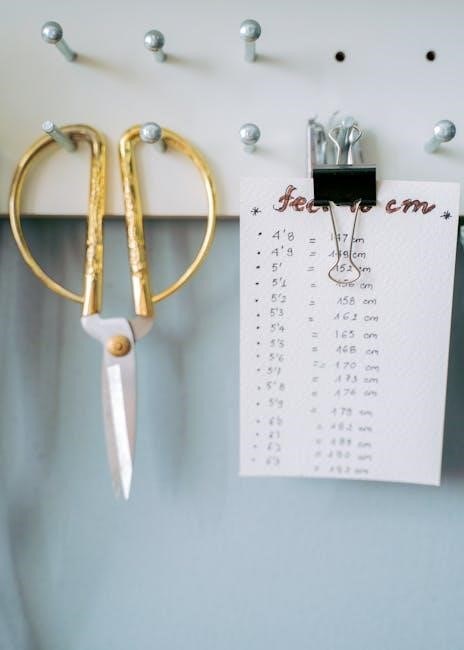
Automotive industries require charts detailing bolt head sizes, thread pitches, and bearing dimensions in both systems. Engineering applications demand high-precision charts, potentially including conversions for tolerances. Jewelry making utilizes charts focused on wire gauges and bead sizes. A PDF format allows for easy printing and on-site reference, minimizing errors and streamlining workflows within these distinct fields. Industry-specific charts improve accuracy and reduce costly mistakes.
Online Conversion Tools vs. PDF Charts
Both online conversion tools and PDF charts serve the purpose of converting inches to millimeters, but they cater to different needs; Online tools offer instant, dynamic conversions – simply input a value and receive the equivalent. They are ideal for quick, one-off calculations and often handle complex fractions and decimals with ease.
However, PDF charts provide a readily available, offline reference. This is particularly useful in environments with limited or no internet access, such as workshops or construction sites. A printed PDF chart eliminates reliance on devices and ensures accessibility.
PDF charts excel at providing a visual overview of common conversions, facilitating pattern recognition and faster lookups for frequently used values. While online tools are precise, a chart offers a quick, at-a-glance solution. The best approach often involves utilizing both: online tools for complex or infrequent conversions, and a PDF chart for everyday reference and situations where internet connectivity is unavailable. Ultimately, the choice depends on the user’s workflow and environment.
Troubleshooting Common Conversion Errors
When converting inches to millimeters, several common errors can occur. A frequent mistake involves misapplying the conversion factor – remembering that 1 inch equals 25.4 millimeters is crucial. Incorrectly multiplying or dividing can lead to significant inaccuracies, especially in precision work.
Another issue arises when dealing with fractional inches. Failing to convert these to decimal equivalents before multiplying by 25.4 will yield incorrect results. Carefully converting fractions like 1/2, 1/4, or 1/8 to their decimal counterparts (0.5, 0.25, 0.125) is essential.
Rounding errors can also accumulate, particularly with multiple conversions. Maintaining sufficient decimal places during intermediate calculations minimizes these inaccuracies. When using PDF charts, ensure you’re reading the correct column and interpreting the values accurately. Double-checking your work, especially in engineering or design applications, is always recommended. Utilizing a reliable online converter to verify results can also help identify and correct errors.