

The 2017 Ford F-150 user manual details a robust, capable truck, offering features like the 5.0L V8 engine and SYNC 3 infotainment.
Overview of the Vehicle
The 2017 Ford F-150, as detailed in its user manual, represents a significant blend of strength, capability, and technology. Available with various engine options – including the powerful 5.0L V8 – and drive configurations, it caters to diverse needs.
From work-ready functionality to comfortable daily driving, the F-150 boasts a high-strength, military-grade aluminum alloy body and a fully boxed frame. The manual highlights features like towing technology and the SYNC 3 infotainment system, enhancing both utility and convenience for the driver and passengers.
Key Features and Specifications
The 2017 F-150 user manual outlines several key features. Engine choices include the 5.0L V8, offering substantial power. Available drivetrains range from 4×2 to 4×4. Towing capacity varies significantly based on configuration, reaching impressive figures.
Inside, the SYNC 3 infotainment system provides connectivity, while safety features like the 360-degree camera aid maneuverability. The manual details dimensions, payload capacities, and available accessories, providing comprehensive vehicle specifications for owners.

Understanding Your Vehicle
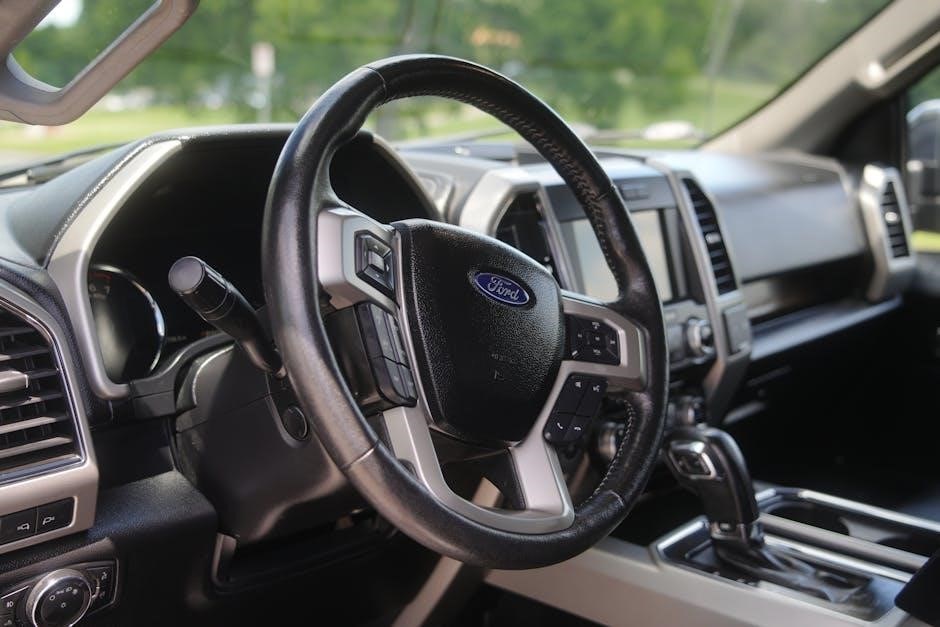
The 2017 F-150 user manual explains dashboard symbols, instrument cluster readings, and vehicle controls, ensuring drivers comprehend all vital information.
Dashboard Symbols and Indicators
The 2017 Ford F-150’s user manual provides a comprehensive guide to understanding the various symbols illuminating on the dashboard. These indicators alert drivers to the vehicle’s status, from low fuel levels and engine temperature to safety system activations like airbags and stability control.
Understanding these warnings—including those related to the braking system, charging system, and four-wheel-drive engagement—is crucial for safe and informed operation. The manual details the difference between warning lights requiring immediate attention and those indicating normal system operation.
Instrument Cluster Information
The 2017 Ford F-150 user manual explains the instrument cluster’s layout, detailing the speedometer, tachometer, fuel level gauge, and temperature readings. It clarifies how to access vital vehicle data, including odometer readings, trip information, and selectable drive modes.
The manual also describes customizable features within the cluster, allowing drivers to prioritize information display. Understanding the cluster’s functions ensures drivers can quickly monitor vehicle performance and respond to any potential issues while on the road.
Operating Your 2017 F-150
The 2017 Ford F-150 user manual guides owners through starting, stopping, and driving procedures, including selecting appropriate driving modes for various conditions.
Starting and Stopping the Engine
The 2017 F-150’s user manual explains a straightforward starting process: ensure the vehicle is in Park or Neutral, firmly press the brake pedal, and turn the ignition key to the start position, or press the start button.
To stop, simply bring the vehicle to a complete halt, shift into Park, and turn the ignition off. The manual also details procedures for emergency stops and jump-starting if the battery is depleted.
Driving Modes and Controls
The 2017 F-150 user manual outlines various driving modes, including Normal, Sport, Tow/Haul, and Snow/Grass, each optimizing performance for specific conditions.
Controls for features like four-wheel drive, electronic locking rear differential, and hill descent control are thoroughly explained. The manual details proper usage for maximizing capability and ensuring safe operation in diverse terrains and weather.
Technology and Infotainment
The 2017 F-150 user manual covers the SYNC 3 system, navigation, and connectivity features, enhancing the driving experience with modern technology.
SYNC 3 System Operation
The 2017 F-150’s SYNC 3 system, detailed in the user manual, offers an intuitive touchscreen interface for controlling audio, navigation, and smartphone integration. Users can access features via voice commands or touchscreen controls. The manual explains how to pair devices, utilize Apple CarPlay and Android Auto, and manage settings. It also covers software updates and troubleshooting common issues, ensuring a seamless and connected driving experience.
Navigation System Details
The 2017 F-150’s navigation system, as explained in the user manual, provides turn-by-turn directions, real-time traffic updates, and points of interest. Users learn to input destinations, customize route preferences, and utilize the system’s voice guidance. The manual details map updates, troubleshooting connectivity issues, and understanding displayed symbols. It also covers features like predictive destination input and seamless integration with SYNC 3.

Safety Features
The 2017 F-150 user manual highlights features like airbags, stability control, and available Ford Co-Pilot360 technologies for driver assistance.
Ford Co-Pilot360 Features
The 2017 F-150 user manual explains Ford Co-Pilot360, a suite of advanced driver-assist technologies. These include Blind Spot Information System (BLIS) with Trailer Coverage, Lane-Keeping System, and Automatic Emergency Braking with Pedestrian Detection. Adaptive Cruise Control with Stop-and-Go capability is also detailed, enhancing highway driving.
Airbag System Information
The 2017 F-150 user manual thoroughly describes the advanced airbag system. It details frontal, side-impact, and safety canopy airbags, explaining their deployment characteristics. Information covers airbag deactivation procedures for front passenger seats and emphasizes the importance of proper seatbelt usage.

Maintenance and Care
The 2017 F-150 manual outlines a detailed maintenance schedule, specifying fluid types, capacities, and inspection intervals for optimal vehicle performance.
Recommended Maintenance Schedule
Your 2017 Ford F-150’s longevity depends on adhering to the recommended maintenance schedule detailed in the owner’s manual. This includes regular oil and filter changes, tire rotations, and brake inspections.
Specific intervals are provided for various services based on normal or severe driving conditions. Checking fluids – engine oil, coolant, brake fluid, and transmission fluid – is crucial. Don’t forget to inspect belts, hoses, and the exhaust system periodically for wear and tear.
Fluid Specifications and Capacities
The 2017 Ford F-150 user manual outlines precise fluid specifications for optimal performance. Engine oil requires a SAE 5W-20 grade, while the transmission needs Motorcraft Mercon V fluid.
Coolant should be a Ford Premium Gold Engine Coolant. Capacities vary by engine; the 5.0L V8 needs approximately 6 quarts of oil and 13 pints of coolant. Using the correct fluids ensures longevity and prevents damage.
Towing and Payload
The 2017 F-150 user manual provides detailed towing capacity charts and payload information, crucial for safe and effective hauling operations.
Towing Capacity Charts
The 2017 Ford F-150 user manual features comprehensive towing capacity charts, varying based on engine, drivetrain (4×2 or 4×4), axle ratio, and cab configuration. These charts detail maximum trailer weight for conventional towing and fifth-wheel/gooseneck setups.
Understanding these charts is vital for safe towing; exceeding limits compromises vehicle control and potentially causes damage. The manual emphasizes consulting the chart specific to your F-150’s configuration before towing.
Payload Capacity Information
The 2017 Ford F-150 user manual provides detailed payload capacity information, crucial for safe and legal operation. Payload, encompassing passengers and cargo, is limited by the Gross Vehicle Weight Rating (GVWR).
The manual stresses locating the sticker on the driver’s side doorjamb for your vehicle’s specific GVWR and payload capacity. Exceeding this limit can damage the vehicle and affect handling, potentially leading to accidents.
If You Need Assistance
The 2017 Ford F-150 user manual directs owners to Ford’s roadside assistance program and warranty details for support and service needs.
Roadside Assistance Program
Your 2017 Ford F-150’s user manual explains comprehensive roadside assistance, covering jump starts, tire changes, towing, and fuel delivery. Coverage details, including limitations and eligibility, are clearly outlined. Access assistance 24/7 via the FordPass app or by calling the dedicated hotline. The manual emphasizes pre-trip inspections and proper vehicle maintenance to minimize roadside incidents. Knowing your coverage ensures peace of mind during travel, and the manual provides all necessary contact information.
Warranty Information
The 2017 Ford F-150 user manual thoroughly details the vehicle’s warranty coverage, including bumper-to-bumper, powertrain, and safety restraint system warranties. It specifies coverage periods, deductibles, and what’s excluded from protection. The manual explains how to file a warranty claim and locate authorized Ford service centers. Maintaining service records is crucial for warranty validation, as outlined within the document.

Detailed Component Information
The 2017 F-150 manual provides in-depth specifications for the 5.0L V8 engine and transmission, aiding understanding of vehicle mechanics and performance.
Engine Specifications (5.0L V8)
The 2017 F-150’s 5.0L Ti-VCT V8 engine delivers 385 horsepower and 387 lb-ft of torque. It features independent spark ignition and variable valve timing for optimized performance. The manual details its bore and stroke dimensions, compression ratio, and fuel requirements. This robust engine provides substantial towing and hauling capabilities, making it a popular choice for demanding tasks. Regular maintenance, as outlined in the manual, is crucial for longevity and optimal operation.
Transmission Details
The 2017 Ford F-150 commonly features a 6-speed automatic transmission, detailed within the user manual. It offers SelectShift functionality for manual control. The manual outlines fluid type specifications and maintenance intervals for optimal performance. This transmission is designed for durability and efficiency, supporting both everyday driving and heavy-duty tasks. Proper operation and scheduled servicing, as described, ensure reliable shifting and longevity.

Troubleshooting Common Issues
The 2017 F-150 manual addresses starting problems and electrical system concerns, offering diagnostic steps and potential solutions for owners.
Starting Problems
The 2017 Ford F-150’s user manual provides detailed guidance for addressing starting issues. It covers scenarios like a clicking sound (weak battery), a no-crank situation (starter motor), or a slow crank. Owners are advised to check battery connections, fuel levels, and the ignition system.
The manual also suggests inspecting the starter relay and solenoid, and offers troubleshooting steps for cold-weather starting difficulties.
Electrical System Issues
The 2017 Ford F-150 user manual addresses potential electrical problems, including blown fuses, malfunctioning lights, and issues with the SYNC 3 system. It details fuse box locations and provides guidance on identifying and replacing faulty fuses.
The manual also covers troubleshooting steps for power windows, door locks, and other electrical components, emphasizing safety precautions when working with the vehicle’s electrical system.

Customization and Accessories
The 2017 F-150 user manual lists available Ford accessories and provides guidelines for aftermarket modifications, ensuring vehicle functionality.
Available Ford Accessories
The 2017 F-150 user manual showcases a wide range of Ford accessories designed to enhance functionality and personalize your truck. These include bed liners, running boards, and various protective elements. Options extend to towing accessories, like trailer brake controllers, and interior enhancements for comfort. Ford also offers exterior styling upgrades, such as wheel options and appearance packages, all detailed within the manual for proper installation and compatibility.
Aftermarket Modifications
The 2017 F-150 user manual advises caution regarding aftermarket modifications, as they may affect vehicle warranty and performance. While customization is popular, alterations to the engine, transmission, or safety systems require careful consideration. The manual stresses verifying compatibility and professional installation to avoid potential issues. Modifications should adhere to local regulations and not compromise the truck’s original safety features.
Vehicle Dimensions and Capacities
The 2017 F-150 user manual provides detailed interior and cargo box specifications, crucial for understanding space and maximizing the truck’s utility.
Interior Dimensions
The 2017 Ford F-150 user manual outlines spacious cabin dimensions, varying by cab configuration – Regular, SuperCab, and SuperCrew. Passenger volume reaches up to 122.5 cubic feet in the SuperCrew.
Headroom, legroom, and shoulder room are detailed for each seating row. Understanding these measurements helps assess passenger comfort, especially during long journeys. The manual also specifies storage compartments and their respective capacities within the cabin.
Cargo Box Specifications
The 2017 Ford F-150 user manual details various cargo box lengths – 5.5ft, 6.5ft, and 8ft – each with specific dimensions for length, width, and height. Box volume varies accordingly, maximizing hauling versatility.
The manual also specifies tailgate positions, tie-down locations, and available cargo management systems like BoxLink. Understanding these specs is crucial for secure and efficient load placement, optimizing the truck’s payload capacity.

Legal and Regulatory Information
The 2017 Ford F-150 manual outlines safety recalls, emissions compliance standards, and legal disclaimers regarding vehicle operation and modifications.
Safety Recalls
The 2017 Ford F-150 user manual directs owners to the official Ford website (www.ford;com/recall) for the most current recall information. It emphasizes checking the Vehicle Identification Number (VIN) to determine if any safety recalls apply to their specific truck.
Ford proactively addresses potential safety issues, and recall notices detail necessary repairs, free of charge, at authorized Ford dealerships. Owners are urged to promptly schedule any required recall work to ensure vehicle safety and compliance.
Emissions Compliance
The 2017 Ford F-150 user manual confirms the vehicle was designed and manufactured to comply with all applicable U.S. Federal and California emissions standards at the time of production.
It details the importance of maintaining the vehicle’s emissions control systems, including regular inspections and adherence to the recommended maintenance schedule. Tampering with these systems is illegal and can void warranty coverage, impacting both performance and environmental responsibility.